

Do I really need a cover letter? One year ago – I would have said hell no! But now….


It actually makes me laugh that I’m about to make a case for a “Cover Letter”. A cover letter is/was a piece of the application process that, quite frankly, was an insulting addition to the process. Nobody read them. I can absolutely confirm after 15 years in recruiting that NOBODY read a cover letter, and even if they did – the resume overshadowed any personal content provided therein. So it was essentially a complete waste of the candidate’s time and effort to draft a cover letter.
Yet, year after year in resume writing and consulting, I would have clients asking me to help them draft cover letters. Why? Because the reality was that some companies, (particularly those that were more “traditional” in culture) still required a cover letter in their online application process. It wasn’t optional, and candidate’s had to input something to complete the application.
WHAT. A. WASTE.
Now – before I get back to my initial purpose of this post, let me explain why I have such an issue with this, because it’s more than just “nobody reads them”. As a recruiting professional, I am hoping for applicants on any job posting I share. I want to see as many applicants pour into the back end of my applicant tracking system as possible. Why? Because this makes my life easier. I don’t have to pro-actively head hunt and scan the internet trying to find talent, because the talent is coming to me. This is known as active sourcing, vs. passive sourcing. These terms are confusing – let me explain:
Active sourcing = sourcing through ACTIVE candidates. Active candidates are those that are ACTIVELY applying (i.e. actively looking for job). This is really helpful because you don’t have to “sell” an opportunity as much.
Passive Sourcing = the opposite of active in that you are sourcing and looking through passive job seekers (i.e. those that are probably employed and not necessarily looking for new work, so you’ll have to sell them on the opportunity).
The terms have nothing to do with describing the recruiters efforts, but rather the candidate’s status. Believe it or not, prior to this year (2023), recruiters have been in a long haul of passive sourcing. When the market is good, recruiters have to work to find talent, and they are usually passive sourcing to fill roles a majority of the time. SO – what does this have to do with cover letters – let’s get back to that…
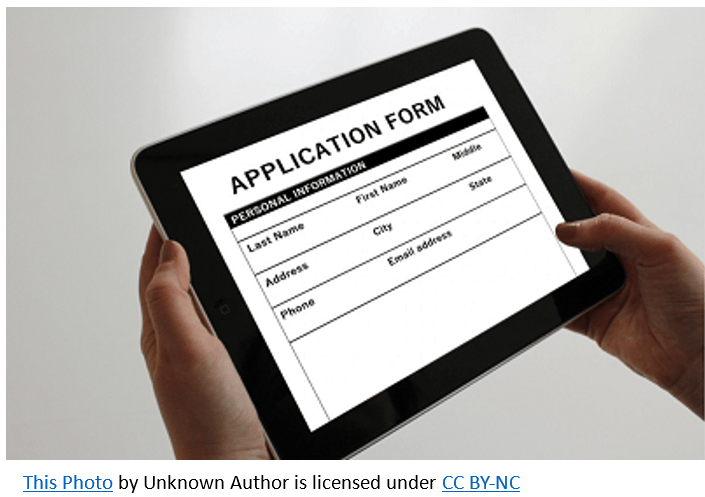
With an application system (known as ATS to those in the biz), you want the steps for a candidate to apply to be as EASY and SEEMLESS as possible because you don’t want them to stop mid way through, or have to pause their submission (to write a cover letter for example). This is known as drop off, and can mean the difference between 100 and 10 applicants on your open job. Since passive sourcing takes twice as long as active, this means that recruiters are going to take much longer to find good candidates for open positions (should I say this louder for the managers in the back??).
SO, over the years, this “issue” of candidate drop off has become more known and lots of organizations have rightfully adopted short and sweet application processes. You may have noticed that less and less companies require cover letters now, and have really shortened their online applications, and this is a big reason why.
Fast forward to 2023, and I am starting to see an uptick in requests for cover letters. This is a really interesting shift, and obviously due to the sheer volume of active job seekers. So, in the spirit of trying to explain the corporate side of this to the job seeker – let’s dive in this.
As frustrating as it may be to draft up a cover letter right now when you’re just trying to get as many applications submitted as possible, know that you are likely 1 of hundreds of qualified applicants on these current open jobs. The market is tight – low supply and high demand for jobs means you need to stand out. Where as one year ago, you could rest on your LinkedIn profile and your resume to get you noticed by recruiters – guess what?? They’re not even looking at you anymore (as a passive applicant), because they have HUNDREDS of active applications on their post, and that is a conservative statement, as I have seen job listings with thousands of applicants. Let’s conservatively say, of 100 applications, they likely have 20-30% of qualified applicants. So what?
Well – if I am a recruiter, and I have 30 great qualified applicants – I need to narrow that down. My hiring doesn’t want to see 30 people, so I need to get them a slate of 5-7 great ones. How do I decide? OR – let’s say my hiring manager DOES want to see all 30 – how do THEY decide? They’re not going to call all 30 to have conversations (I can assure you) because that’s at least 15 hours of time that they don’t have.
HENCE – the return of the cover letter!
Like it or not, its a quick way for hiring managers or recruiters to review a personal narrative for a candidate and help differentiate you and your background from multiple qualified people. minimally, it would help them rank the order of discussions and interviews they want to partake in.
So with that friends, I’m sad to say, it is important that you draft yourself a cover letter that you can use to help differentiate yourself and stand out. It’s best to tailor cover letters for the opportunity you’re applying to, but even if you can draft a generic cover letter, you’ll be in a better position. I have noticed that some companies are requesting but not requiring these, so DON’T be fooled and think you can bypass it. The ultimate test of someone’s commitment to a job opportunity is to see what level of detail they will put into their full application. If it’s an option – try to include it. You won’t regret it.
PS – share, like and subscribe if you want more content on “how to” writing a good cover letter.
 Corporate Blog
Leave a comment